These days, it’s trendy to talk about “high-resolution” in music—24-bit/192 kHz is pitched as the Ultra HD for your ears. But let’s be honest: can you really hear the difference? High-res advocates passionately claim it’s a revolution in sound, while critics (like me) dismiss it as clever marketing. So where’s the truth? Let’s dig deeper.
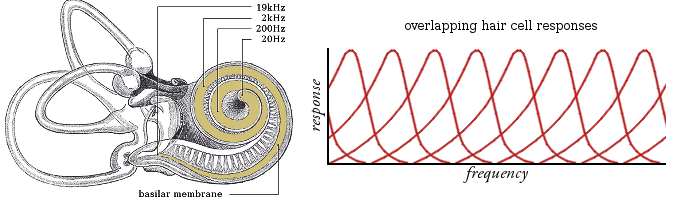
Let’s start with our ears. We can hear roughly from 20 Hz to 20 kHz—and that’s under ideal conditions. As we age, this range shrinks, so if you’re over 30, your ability to detect anything above 18 kHz is pretty much nil. Formats like 44.1 kHz (the CD standard) already cover our hearing range with room to spare. And 192 kHz? That’s like buying a telescope to look at your feet. You can believe in magic all you want, but your brain simply cannot process those frequencies.
That said, let’s be fair. High-res formats do have their uses in professional settings. For instance, in mastering, where every detail counts, or in archiving recordings, where preserving the highest quality for future processing is crucial. Additionally, those with top-notch audio equipment might notice slight differences under ideal listening conditions.
Even if our brains could process ultrasonic frequencies, there’s another surprise. Ultrasonic frequencies—the very ones often touted as a high-res feature—can actually harm your sound. How? It’s all about intermodulation distortion. This happens when audio equipment starts mixing high frequencies, creating unwanted noise and artifacts. The problem is especially noticeable on high-end gear, where you’d expect perfection. If you want to dive deeper, check out studies like Oohashi et al., which explore the impact of high frequencies on audio perception.
Now, let’s talk bits. The argument “24 bits sound better than 16!” sounds appealing, but does it hold up? Let’s break it down. CD-quality offers a 96 dB dynamic range—from a whisper to a jet engine. A 24-bit format increases this range to 144 dB. Impressive? Sure. But in real life, recordings rarely exceed 80 dB. In other words, half those bits are just sitting there unused. Meanwhile, the files take up more space and demand more resources to play. It’s like using a semi-truck to deliver a single book—wasteful and unnecessary.
“But the sound is cleaner!” enthusiasts might argue. Really? Try a blind test. As Meyer & Moran’s research shows, 9 times out of 10, listeners can’t tell the difference between 16-bit and 24-bit audio. This proves that for the average listener, the difference is negligible. So before splurging on high-res formats, invest in quality audio equipment instead.
And here’s where it gets interesting. Good equipment is where the real magic of sound lies. High-quality headphones, amplifiers, and speakers make a noticeable difference. They can elevate even MP3 files to a level that’s enjoyable to listen to. For example, quality headphones with a wide frequency range and low distortion levels will let you hear more details than any format experiment. On the other hand, poor equipment will ruin even the best high-res recordings. So spending money on gear is much smarter than chasing trendy formats.
Finally, let’s talk about marketing. All these stories about “hidden frequencies” and “rich sound” are great for selling expensive files. Manufacturers often imply that high-res is the next level of audio bliss, but that’s not always the case. Test for yourself, check your gear, and don’t fall for loud promises.
If you want to get the most out of your music, focus on quality recordings, invest in good equipment, and experiment with settings. For instance, try finding the acoustically optimal spot in your room or use an equalizer to adjust the sound to your taste. These changes often bring a bigger improvement than switching formats.
At the end of the day, the format doesn’t matter as much as how the music moves you. Formats, numbers, frequencies—they’re just tools. The most important thing is to enjoy your music. And if you love listening to old tapes or vinyl, then that’s your perfect sound.
Helpful Links for Further Reading:
- ISO 226:2003 “Equal-Loudness Contours”
- Oohashi et al., “High-Frequency Sound Above the Audible Range”
- Meyer & Moran, “Audibility of a CD-Standard A/D/A Loop”
- Moorer, “Theoretical Limits of Dynamic Range in Digital Audio”
- P. Reiss, “Perceptual evaluation of high-resolution audio”